
Bringing Global Insights to Local Skies: GASP & Partners Attend Air Sensors International Conference

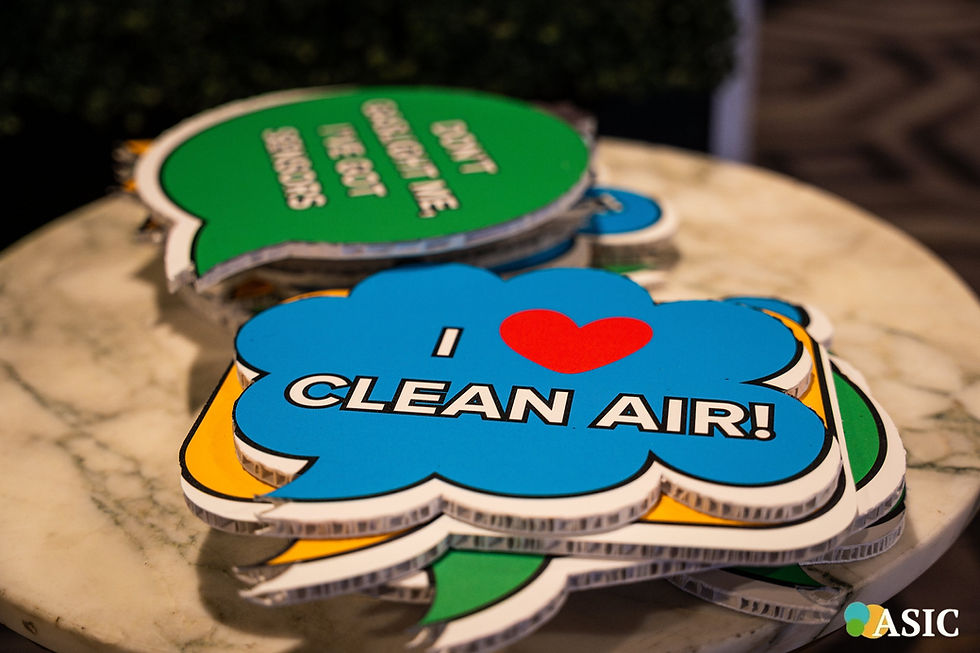
The fight for clean air is global, but the solutions are intensely local.
That’s why GASP attended the Air Sensors International Conference (ASIC) in Los Angeles earlier this month alongside our partners at CREATE Lab and Environmental Health Project (EHP).
Organized by the UC Davis Air Quality Research Center, ASIC is the premier global forum where leading scientists, policymakers, industry innovators, and grassroots community advocates gather to discuss the cutting edge of air monitoring technology and data-driven environmental justice.
For an organization like GASP—and for communities like ours that bear the brunt of industrial emissions—attending this conference helped us bridge the gap between cutting-edge global science and the real, breathable air in our neighborhoods.
Why ASIC Matters to the Air We Breathe
Historically, ambient air quality monitoring was the exclusive domain of massive, multi-million-dollar EPA monitoring stations like the ones maintained by the Allegheny County Health Department (ACHD) here locally.
While highly accurate, these stations are sometimes few and far between, often missing the distinct hyperlocal pollution events that impact specific valley communities and fence-line neighborhoods.
The conversation at ASIC focuses heavily on changing that paradigm through low-cost sensor technology and citizen science - the same tech GASP and our partners are using for our Allegheny County Community Air Monitoring Project.
From advanced machine learning algorithms that correct data drift to community-led networks tracking wildfire smoke and industrial toxics, the conference highlighted a powerful truth: When communities have accessible, reliable data, they have power.
Key Takeaways from the Conference
Improved Calibration: Next-generation low-cost sensors are becoming increasingly sophisticated, using advanced algorithms to account for humidity, temperature, and local weather anomalies.
Hyperlocal Mapping: Panelists (like our partners at CREATE Lab and Environmental Health Project) showcased how cities worldwide are using dense sensor networks to identify specific pollution hot spots, driving targeted public health interventions and policy changes.
Environmental Justice Data: Activists and scientists are co-creating data frameworks that stand up to regulatory scrutiny, ensuring frontline communities cannot be ignored by local health authorities or industry polluters.
Powering Our Allegheny County Community Air Monitoring Project
So, how does an international conference in Los Angeles change things on the ground for us? Excellent question!
It directly supercharges our current community monitoring initiatives, including our dedicated Allegheny County Community Air Monitoring Project.
“My biggest takeaway from ASIC is the central role communities play in air quality work,” GASP Field Technician Julie Stouffer said. “This work relies on the knowledge and experiences of people directly impacted by poor air quality. ASIC reinforced the importance of making air quality data accessible and easy to understand so communities can meaningfully engage and benefit from this work."
As we deploy and manage localized monitors, the insights gleaned from ASIC provide a direct blueprint for success:
1. Hardening Our Data to Withstand Scrutiny
For community data to drive regulatory action or hold industry accountable, it must be bulletproof. Learning the latest best practices in sensor calibration and placement ensures the data we collect is accurate, verifiable, and capable of standing up to official pushback.
2. Optimizing Our Networks
The deployment strategies shared by global peers help us understand best practices for how we position monitors for maximum community impact. This ensures we are capturing the true, real-time exposure of residents rather than relying on delayed regional averages.
3. Scaling Citizen Science
A monitor is only as effective as the community utilizing it. GASP is taking the community-engagement models highlighted at ASIC and applying them locally.
The Road Ahead
As we know all too well here in Allegheny County: Clean air isn't given - it is fought for and defended.
The data we collect through our monitor projects will continue to shine a light on local air quality challenges, giving all of us the tools we need to demand transparency, support enforcement, and protect the health of our families.


Comments